Vegetarian, Jay, Halal & Allergies in Thailand (2026): Fish Sauce, Shrimp Paste, and What to Actually Say
Mangsawirat isn't the same as jay, "halal" often needs no translation at all, and Thai street food hides fish sauce, shrimp paste, and peanuts in places you won't expect.
**Quick summary — 3-minute read**
• "Vegetarian" (mangsawirat) in Thai cooking often just means no meat chunks — it can still include fish sauce, oyster sauce, or egg.
• Jay (เจ) is the strict standard: no animal products at all, and traditionally no pungent vegetables like garlic or onion either — look for the yellow sign with red เจ characters.
• Hidden animal ingredients hide in dishes that look plant-based: nam pla (fish sauce), kapi (shrimp paste), oyster sauce, chicken stock, and pork lard are all common cooking bases.
• Most Thai vendors don't understand the English word "halal" — look for Thai halal certification marks, and ask directly about pork and cooking alcohol rather than the general question.
• Peanuts and shellfish carry real allergy risk in Thai cooking, and many street stalls have no printed menu at all — treat a photo-and-ask tool as a first screen, not a substitute for asking the vendor directly.
If you've already read the Japan version of this guide, the underlying problem in Thailand is similar but the specifics are different enough to trip up even careful travelers: the word most people reach for — "vegetarian" — doesn't map cleanly onto Thai food culture the way it might at home, and the strict standard that does exist, jay, has its own visual sign and its own rules that most visitors have never heard of.
This guide covers the vegetarian-versus-jay distinction, the specific ingredients that hide in dishes that look completely plant-based, practical strategies for halal and allergy needs, and how to communicate spice tolerance in a country where "not spicy" is genuinely relative.
Vegetarian (mangsawirat) vs. jay (เจ): the distinction that matters most
Mangsawirat, the Thai word most commonly translated as "vegetarian," often functions the way "vegetarian" does on menus in a lot of countries where it isn't a formal dietary category: it tends to mean no visible meat chunks, not necessarily no animal-derived ingredients at all. A dish labeled mangsawirat can still be cooked with fish sauce, finished with oyster sauce, or contain egg — none of which read as "meat" to a cook working from that looser definition.
Jay (เจ) is the actual strict standard, rooted in Chinese-Thai Buddhist vegetarianism, and it excludes all animal products completely — no meat, no fish, no eggs, no dairy, and traditionally no pungent vegetables either, including garlic, onion, and chives, which are considered too stimulating under the same dietary philosophy. Jay food is marked with a recognizable sign: a yellow flag or banner with red Thai text reading เจ, usually posted at the stall or restaurant entrance or above the specific dishes that qualify.
Thailand's annual Vegetarian Festival period pushes many vendors — including ones that don't normally serve it — to offer jay food temporarily, which is worth knowing so you don't assume every yellow-flag stall you see at that time of year keeps jay food available year-round. Some restaurants do maintain a jay section on their regular menu permanently; others only put the flag out during the festival window. Either way, a mangsawirat label and a เจ sign are not interchangeable, and it's worth checking which one you're actually looking at.
Hidden animal ingredients to know
- Nam pla (fish sauce): the single most common seasoning base in Thai savory cooking, used even in stir-fried dishes that read as entirely vegetable-based on sight.
- Kapi (shrimp paste): the backbone of many curry pastes, dips, and sauces — it's blended in during preparation, so it's rarely visible in the finished dish and easy to miss unless you ask specifically.
- Oyster sauce: a standard seasoning in stir-fried vegetable dishes, added for savoriness in a way that doesn't change how the dish looks.
- Chicken stock and pork lard: both turn up as a cooking base in soups, fried rice, and noodle dishes even when the dish's main visible ingredient is vegetables or tofu.
None of this means safe eating in Thailand requires constant vigilance at every meal — it's a short, specific list, and once you know it, checking becomes a single direct question rather than a long interrogation of the dish.
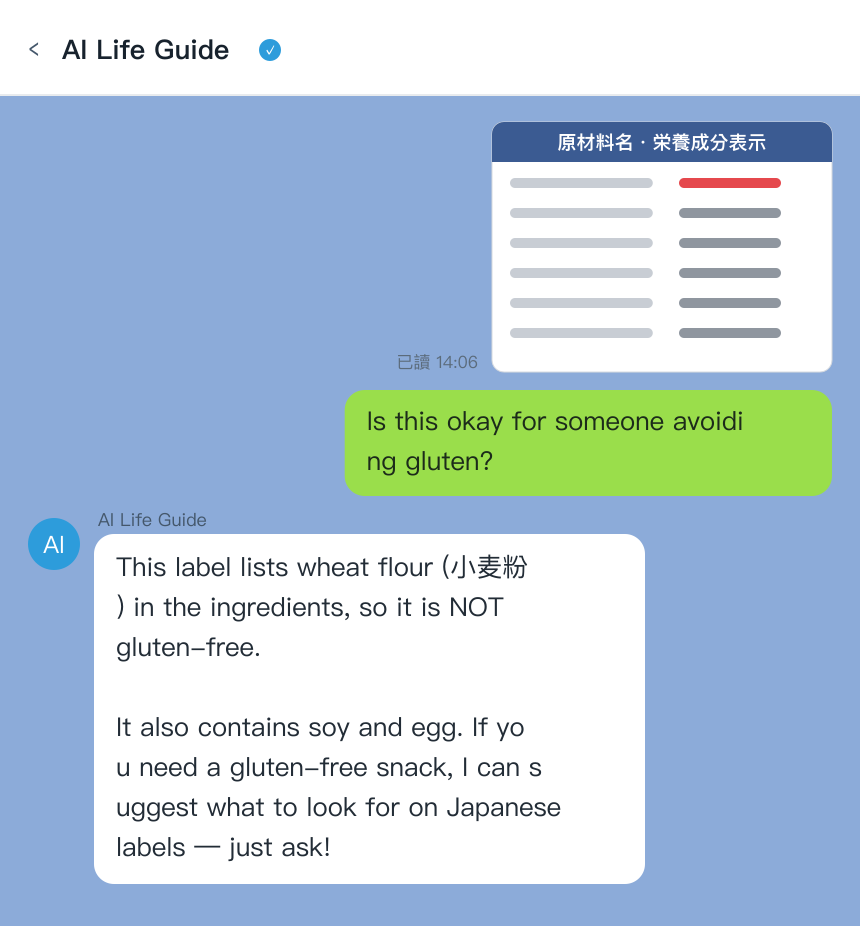
AI Life Guide demo: photograph a sauce or curry paste label to check for fish sauce, shrimp paste, or oyster sauce (simulated screenshot)
Packaged sauces, curry pastes, and snack products sold in Thai supermarkets and convenience stores carry printed ingredient lists — reading them, or having them read to you, is often the most reliable way to confirm what's actually in a bottle or packet before it goes into your cooking or your bowl.
Halal food in Thailand
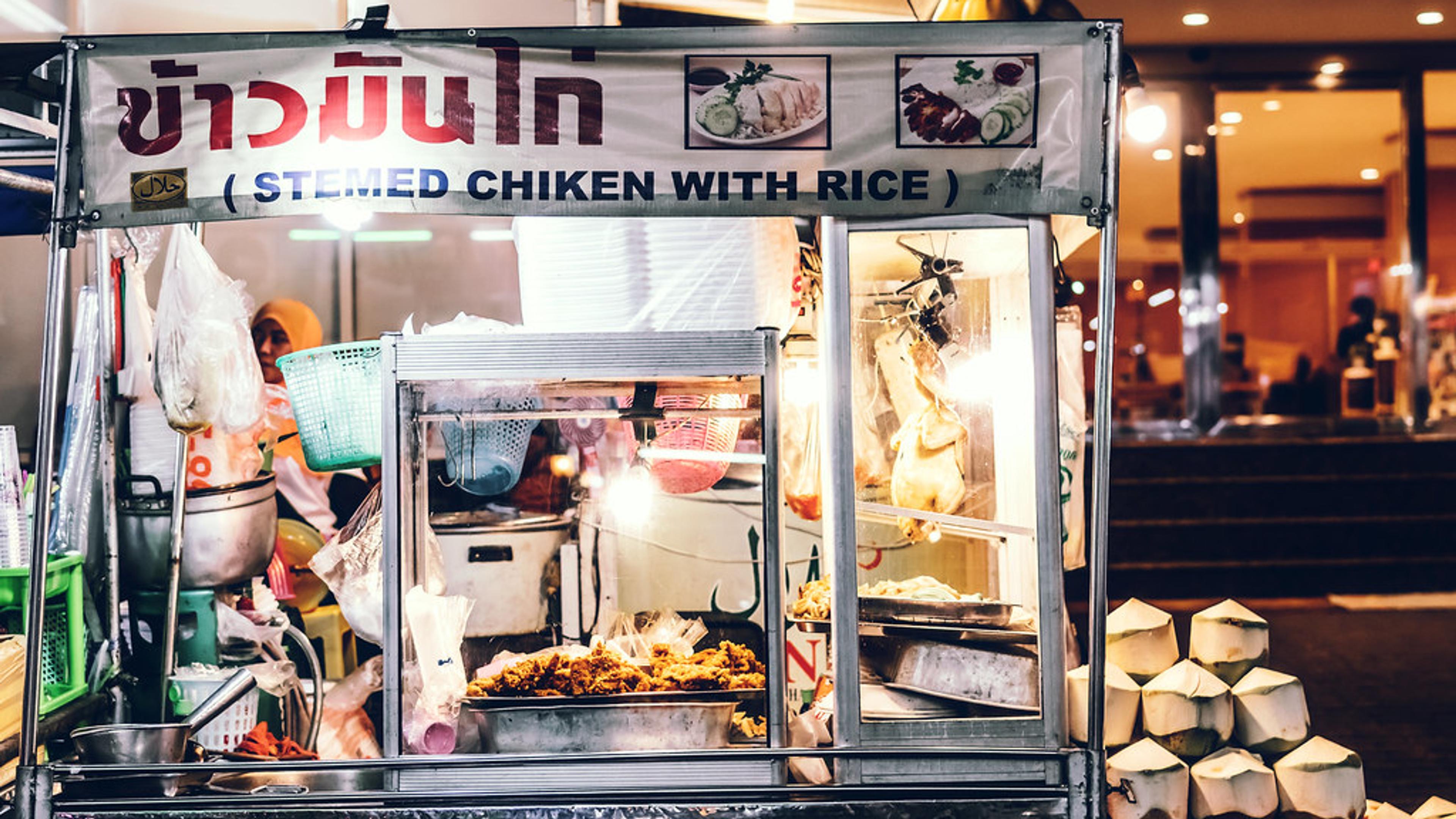
Thailand is majority Buddhist, and outside of the country's south and specific Muslim-majority neighborhoods elsewhere, most street vendors and small restaurants genuinely don't understand the English word "halal" when asked directly — it isn't a concept most of the food industry outside those areas is set up to answer. Rather than asking the general question, look for a Thai halal certification mark posted at the restaurant, which is a more reliable signal than a menu claim or a vendor's best guess at what you mean.
Muslim-majority neighborhoods and Thailand's southern provinces have a meaningfully higher density of halal-certified eateries, and it's worth seeking those areas out specifically if halal dining matters for your trip, rather than assuming any given Bangkok street stall will have an answer. When you do find a restaurant that identifies as halal, being direct about pork and about alcohol used in cooking — not just served as a drink — gets a more useful answer than the broad question, since preparation practices vary even among restaurants that market themselves as halal-friendly.
Allergies: peanuts, shellfish, and no-menu street stalls
Peanut and shellfish risk run genuinely high in Thai cooking. Peanuts appear in pad thai, in som tam (green papaya salad) as a garnish or crushed topping, and in various dipping sauces; shrimp paste and fish sauce mean a shellfish or fish cross-contact risk exists even in dishes that look entirely vegetable-based, for the same reason they trip up vegetarians. Street stalls compound the problem specifically for allergy management: many have no printed menu at all, cooking a small, fixed rotation of dishes from visible pots and pans, which means there's often nothing to pre-screen — you point, or you ask, or you watch the prep happen in front of you.
For anything beyond mild sensitivity, a written Thai-language allergy card, shown to the vendor before you order, remains one of the more reliable tools available, since it puts the specific concern in front of the person actually cooking rather than relying on a rushed verbal exchange in a busy stall. Treat a photo-and-ask approach as a genuine first screen for identifying likely ingredients — not a guarantee, and not a substitute for confirming directly with whoever is cooking when the stakes are serious.
Upscale restaurants vs. street stalls
The practical checking process differs a lot depending on where you're eating. Sit-down restaurants, particularly ones used to foreign visitors, are more likely to have printed allergen or dietary information, or staff trained to answer a specific ingredient question, even if the answer still requires asking rather than reading it off the menu directly. Street stalls run the opposite way — faster, cheaper, and often better food by most travelers' accounts, but with no printed information at all and a cook who may be mid-service and not expecting a detailed dietary conversation.
Neither setting is inherently safer or riskier across the board; the difference is how you need to approach each one. At a restaurant, a specific written or spoken question usually gets a specific answer. At a street stall, the honest approach is often to watch what's being cooked, ask the one or two ingredient questions that matter most to you, and accept that a stall preparing food for a fast-moving line may not be able to fully customize a dish on request the way a restaurant kitchen can.
Spice communication: how to actually dial it down
Mai pet (not spicy) and pet nid noy (a little spicy) are the two phrases that get you the furthest, either spoken or shown on your phone. The honest caveat worth carrying into every order: "not spicy" is relative to the cook, not to you, and a Thai kitchen's version of mild can still land hotter than a lot of Western palates expect. Treat these phrases as a dial you're turning in the right direction, not a guarantee of zero heat.
- Term: Mangsawirat (vegetarian) | What it actually means: Often just "no meat chunks" — may include fish sauce, oyster sauce, egg | What to say: Ask directly: "mai sai nam pla, kapi" (no fish sauce, no shrimp paste)
- Term: Jay (เจ) | What it actually means: Strict vegan standard, no animal products, traditionally no pungent vegetables | What to say: Look for the yellow flag with red เจ characters
- Term: Halal | What it actually means: Islamic dietary law — most vendors outside Muslim areas won't recognize the English word | What to say: Look for a Thai halal certification mark; ask directly about pork and cooking alcohol
- Term: Mai pet | What it actually means: "Not spicy" — relative to the cook, not to you | What to say: Use as a dial, not a guarantee of zero heat
Not sure if a dish is genuinely jay, or what's hiding in a sauce label? Add AI Life Guide on LINE (free) and photograph it before you order.
FAQ
Q: Is Thai vegetarian food really vegetarian?
A: Not always — "vegetarian" (mangsawirat) on a Thai menu often means no visible meat chunks, but the dish can still contain fish sauce, oyster sauce, or egg. For a stricter standard, look specifically for jay (เจ) food, marked with a yellow flag and red Thai text, which excludes all animal products.
Q: What does jay mean in Thailand?
A: Jay (เจ) is a strict vegan standard rooted in Chinese-Thai Buddhist vegetarianism — no meat, fish, eggs, or dairy, and traditionally no pungent vegetables like garlic or onion either. It's marked with a recognizable yellow sign bearing red เจ characters, distinct from the looser "vegetarian" (mangsawirat) label.
Q: How do I say "no fish sauce" in Thai?
A: "Mai sai nam pla" asks for no fish sauce specifically; adding "kapi" (shrimp paste) covers the other major hidden ingredient, since both are common cooking bases even in dishes that look plant-based. Asking about these two ingredients by name gets a far more useful answer than asking generally whether a dish is vegetarian.
Q: Is Thai street food safe with a nut allergy?
A: It requires real caution — peanuts appear in pad thai, som tam, and various sauces, and many street stalls have no printed menu to pre-screen from, meaning you often have to ask or watch the prep directly. For a serious allergy, a written Thai allergy card and a direct conversation with the vendor are safer than relying on a menu or a translation app alone.
Q: How do I find halal food in Bangkok?
A: Look for a Thai halal certification mark posted at the restaurant rather than asking the general English question "is this halal," which most vendors outside Muslim-majority areas won't recognize. Bangkok has specific neighborhoods with a higher density of halal-certified restaurants, and searching those areas specifically is more reliable than checking street stalls at random.
Bottom line
Eating safely in Thailand as a vegetarian, halal, or allergy-conscious traveler isn't about avoiding Thai food — it's about knowing that "vegetarian" needs a follow-up question, jay has its own sign, "halal" often needs no English at all, and a handful of specific ingredients hide in dishes that look completely safe. Once you know the short list, most of the actual checking takes one direct question rather than a long negotiation.
Ordering from a stall with no printed menu? Add AI Life Guide on LINE (free) and photograph the pot, sauce bottle, or sign before you point.
Further reading
- Thai Street Food Ordering Guide
- Vegetarian, Halal, or Allergic in Japan: How to Check What's Really in Your Food (2026)
- Thailand Tourist Scams 2026: The Ones That Actually Happen, and How to Check in Seconds
Sources
- Traveler forum, TripAdvisor, and user review reports, 2025–2026
- Hands-on testing and Thai food-culture reporting, 2026